
Part one · the catalogue
All fifty-four shelves, counted and grouped
Fifty-four shelves, grouped the way the catalogue groups them, with the number of listings each one held at 06:46 Beijing time on 22 October 2026. Counts move daily; the shape of the catalogue does not.
The shape of it: a catalogue of 29,372, very unevenly spread
Browse by category and the first thing you notice is how lopsided the stock is. Apparel holds more than half of everything. Sneakers alone outnumber the whole accessories group twice over if you set bags aside. Perfume, the shelf people ask about most often, is thirty-five listings in total, which is fewer than the gloves shelf and the face mask shelf put together have in a good week.
That matters for how you search. On a deep shelf, filtering by words is the only sane approach: nobody scrolls five thousand pairs of trainers. On a thin shelf, open the whole thing and look at every photo, because you will reach the end in a minute and you will see options that no search term would have surfaced.
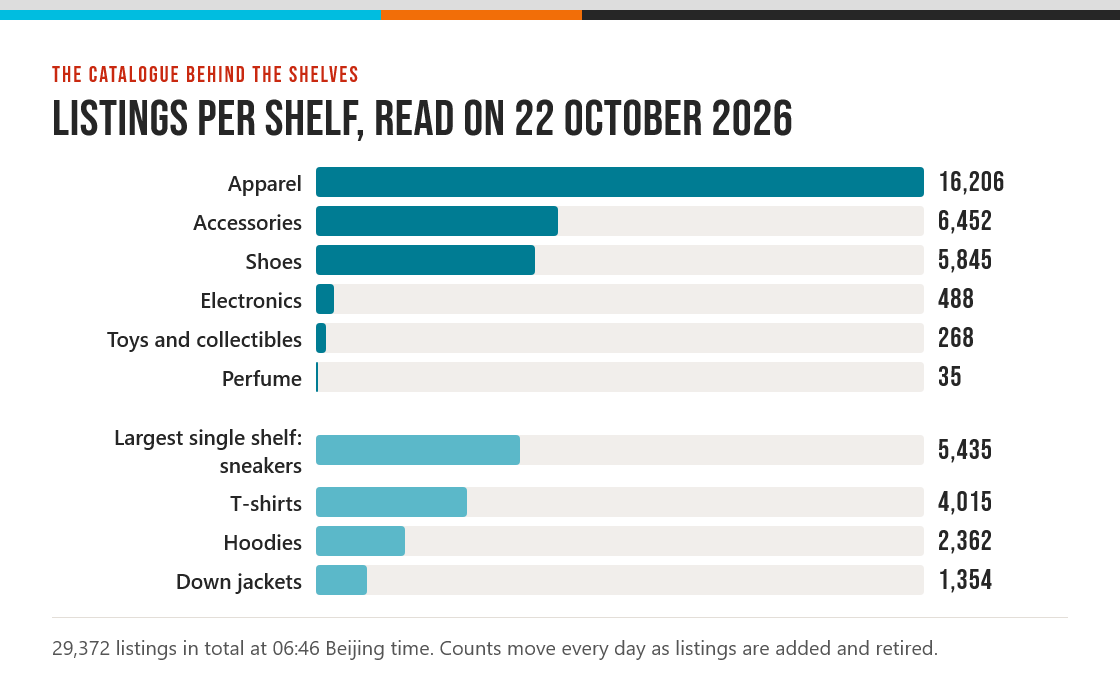
The groups below are listed largest shelf first inside each heading. Numbers in grey are the live listing counts we read; the sentence under each group is ours.
Shoes Listings 5,845
- Sneakers. Everything from running silhouettes to skate shapes.
- Sandals. Slides and strapped pairs; summer stock thins in winter.
- Slippers. Indoor pairs and fur-lined mules.
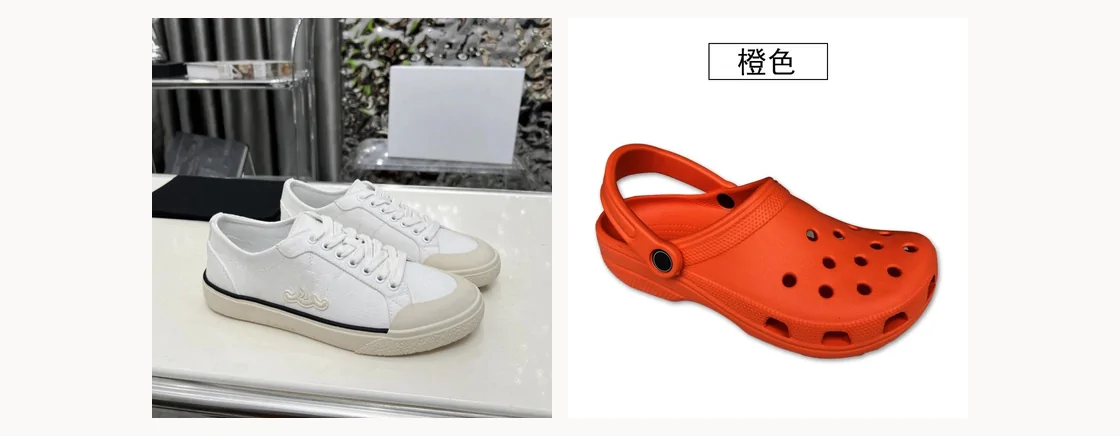
- Casual shoes. Canvas and low-profile leather.
- Heels. Court shoes and block heels.
- Leather shoes. The smallest footwear shelf; check the photos, a few pairs here are trainers.
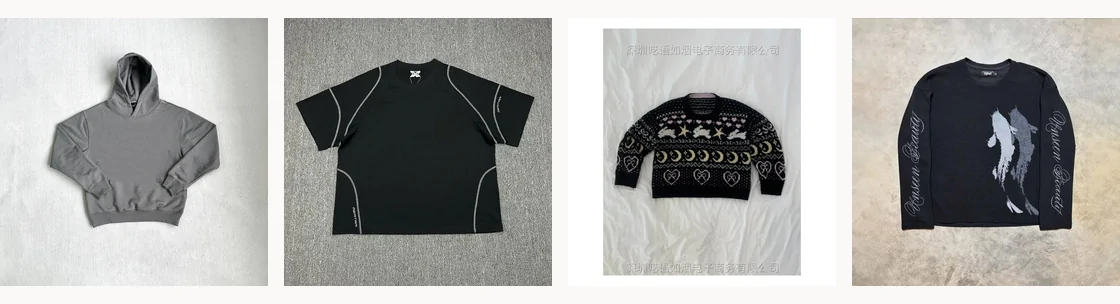
Apparel: tops Listings 8,490
- T-shirts. The second-largest shelf on the site.
- Hoodies. Heavyweight and thin fleece, zip and pullover.
- Sweaters. Knits, cardigans, patterned crewnecks.
- Polos. Short-sleeve collared knits.
- Vests. Gilets and knitted tank vests.
- Shirts. Button-through cotton, corduroy and flannel.
- Tanks. Sleeveless tops, ribbed and printed.
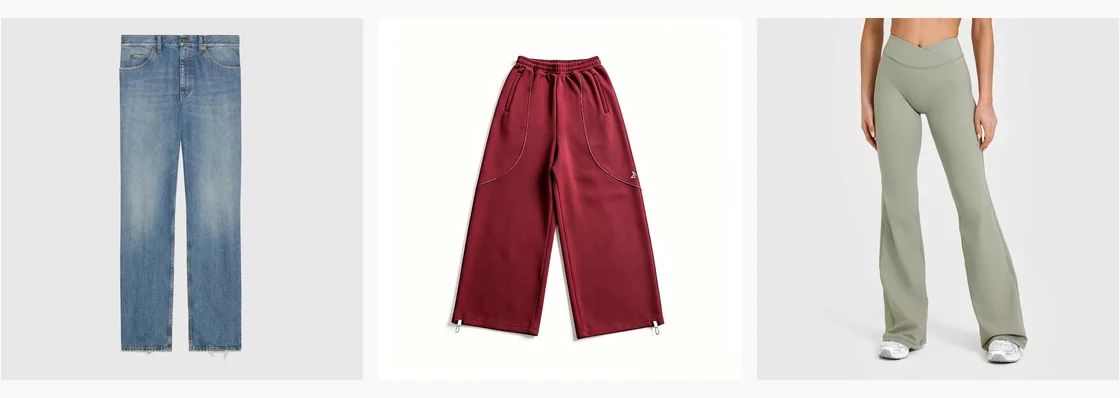
Apparel: bottoms Listings 2,306
- Shorts. Mesh, nylon and denim cuts.
- Sweatpants. Cuffed joggers, flared and wide-leg.
- Jeans. Washed, stacked, painted and plain.
- Pants. Cargo, tailored and technical.
- Skirts. A thin shelf; the dress shelf is thinner still.
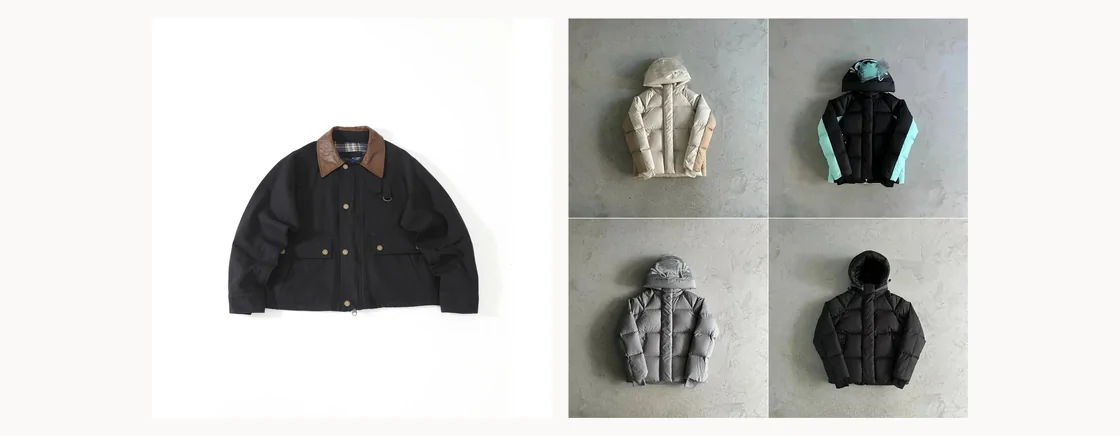
Apparel: outerwear and the rest Listings 5,410
- Down jackets 1,354
- Jackets 845
- Windbreakers 66
- Sets 1,839
- Socks 620
- Underwear 235
- Football shirts 218
- Bras 73
- Sleepwear 41
- Dresses 33
- Swimwear 30
- Sun protection 4
- Down jackets. Puffers, long and cropped.
- Jackets. Bombers, work jackets, varsity.
- Windbreakers. Light shells for shoulder seasons.
- Sets. Two-piece tracksuits and co-ords sold as one line.
- Socks. Crew, ankle and character prints.
- Underwear. Briefs and boxers, often in packs.
- Football shirts. Club and country kits, many with shorts.
- Bras. Sports and everyday cuts.
- Sleepwear. Pyjama sets and robes.
- Dresses. The closest thing here to a womenswear shelf.
- Swimwear. Trunks and two-piece sets.
- Sun protection. Four listings; a shelf in name only.
Accessories Listings 6,452
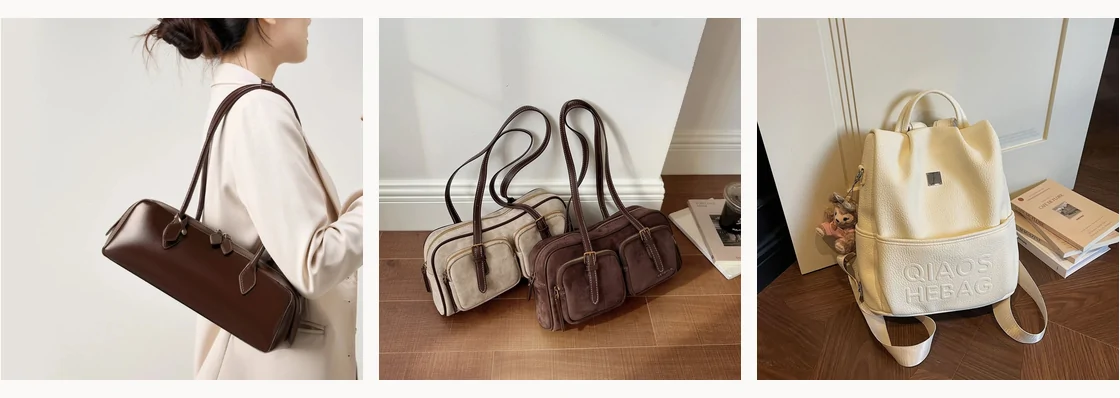
- Bags: shoulder bags 1,033
- Jewellery 1,214
- Wallets 832
- Hats 678
- Bags: backpacks 526
- Belts 477
- Ties 288
- Eyewear 223
- Bags: belt bags 193
- Bags: travel bags 180
- Watches 177
- Keychains 142
- Bags: clutches 76
- Scarves 35
- Gloves 11
- Face masks 6
- Bags: shoulder bags. Totes, baguettes and crossbody shapes.
- Jewellery. Cuban chains, pendants, rings, studs.
- Wallets. Card holders, zip rounds, long folds.
- Hats. Caps, beanies, bucket and straw.
- Bags: backpacks. Day packs and laptop carriers.
- Belts. Leather, canvas and studded.
- Ties. Silk and knitted.
- Eyewear. Sunglasses and clear-lens frames.
- Bags: belt bags. Waist and sling pouches.
- Bags: travel bags. Duffels and cabin holdalls.
- Watches. Steel bracelets and dress dials.
- Keychains. Charms, plush and metal.
- Bags: clutches. Evening and pouch shapes.
- Scarves. Wool, silk and knitted tubes.
- Gloves. A seasonal shelf of eleven.
- Face masks. Six listings, mostly fabric.
Electronics, toys, perfume Listings 791
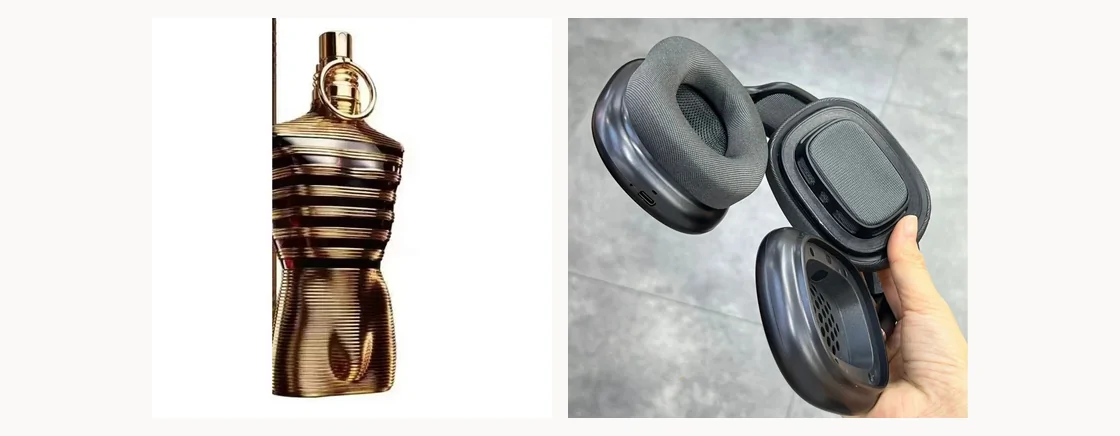
- Headphones 244
- Toys 182
- Speakers 96
- Figurines 56
- Mobile phones 50
- Curling irons 39
- Perfume 35
- Plush toys 30
- Headphones. Earbuds and over-ear pairs.
- Toys. Models, blind boxes and games.
- Speakers. Portable and desk units.
- Figurines. Designer toys and statues.
- Mobile phones. Handsets and accessories.
- Curling irons. Styling tools; check the plug type.
- Perfume. The whole shelf is thirty-five listings.
- Plush toys. Soft toys and dolls.
Twelve word searches that cut across the shelves
Some things people want are not a shelf at all. Womenswear is the clearest case: the catalogue is organised by garment, not by who wears it, so there is no womenswear shelf to open. A word search is the entry instead, and it behaves differently from a shelf: results are matched on the listing text, so they are broader, messier and worth reading twice.
- Womenswear
- Corduroy
- Cargo trousers
- Knitted jumpers
- Tote bags
- Beanies
- Flared cuts
- Card holders
- Football shorts
- Trail shoes
- Crew socks
- Glasses cases
Searching works best with the words a seller would actually type. Fabric, cut, colour and use beat anything else: corduroy, ribbed, flared, waterproof, wide leg, card holder. Maker names return whatever happens to carry them in the title, which is rarely what you meant.
What a catalogue entry is not telling you
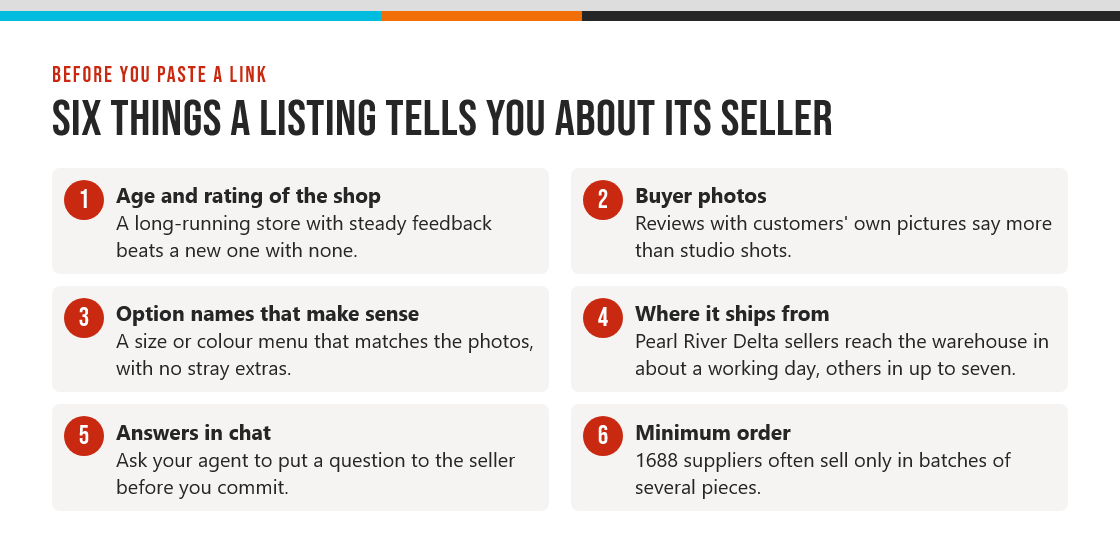
A catalogue entry is a window onto a seller's own page, not a shop of its own. The photo is the seller's photo. The price is the lowest option on the seller's menu, which is why a jacket can be listed at one figure and cost more once you pick your size. The stock figure is whatever the seller typed, and sellers type round numbers like 999 when they mean "plenty".
Four habits save most of the trouble:
- Open the listing and look at the option menu before you decide the price is the price.
- Read the photos as a set. A single studio shot tells you less than four messy ones.
- Check that the option names match the photos. Menus that mix unrelated goods are a sign the seller is using one page for several products.
- Note the things an arrival check cannot catch, and ask about them in the order notes instead. What the inspection covers sets out where that line falls.
Work out a landed costJudging sellers and optionsTake an item through the route