
Part two · the route
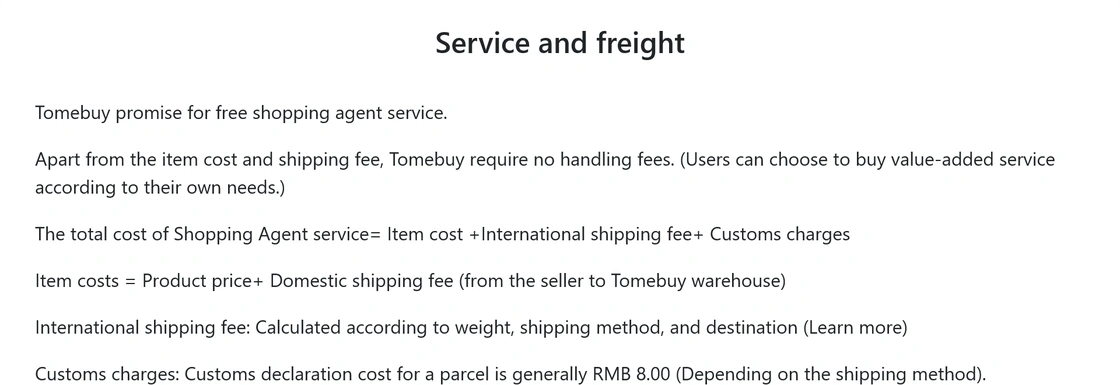
The ten stops of a Tomebuy order
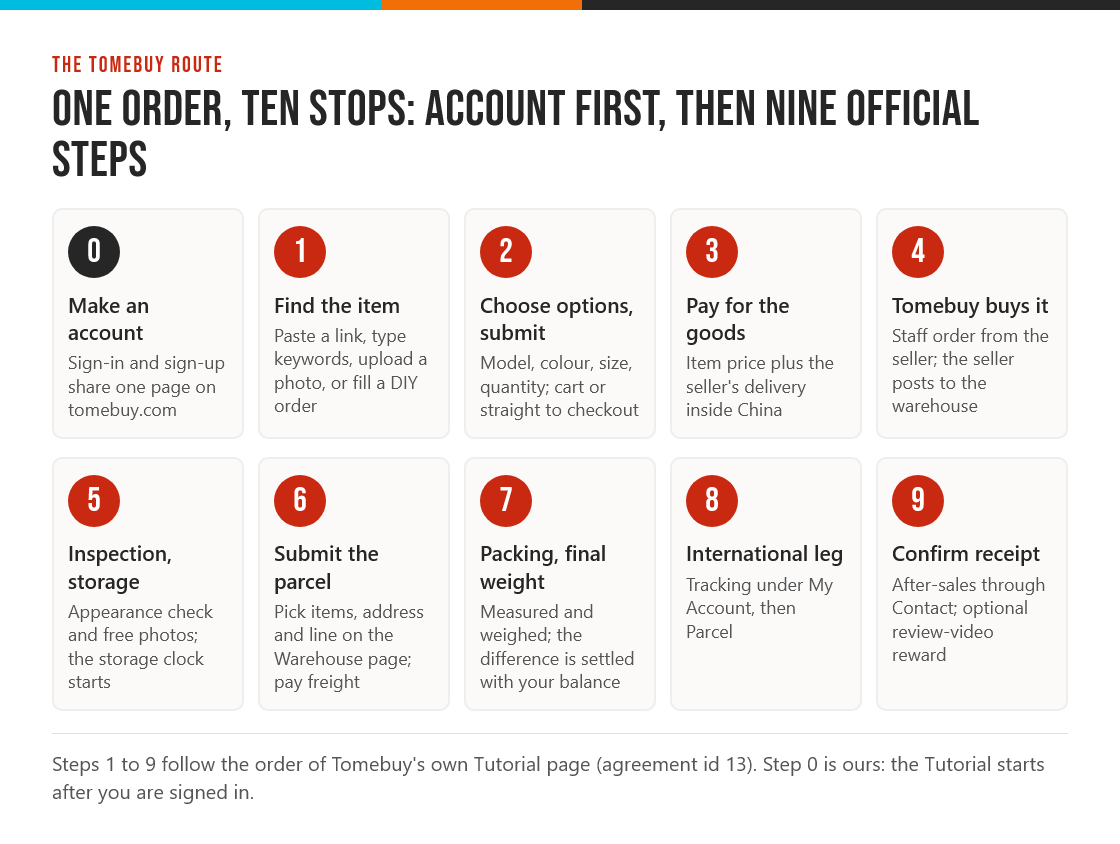
The official walkthrough has nine steps and starts after you are signed in. This version adds the account as stop zero and marks, at each stop, what the site decides for you and what you decide for yourself.
Official Tomebuy buying guide — written steps, checked 25 October 2026.
Before you start: what the whole thing looks like
Getting something from a Chinese marketplace to a doorstep abroad is two journeys with a warehouse in the middle. The first journey is domestic and ordinary: a seller posts a parcel across China. The second is international and expensive, and it is priced on the parcel you build rather than on the things you bought. The warehouse between them is where you get a look at the goods and a chance to change your mind.
Read it once end to end before your first order. The stops that surprise people are five, where the storage clock starts, and seven, where the freight price changes after you have already paid it.
Stop zero: the account the Tutorial assumes you already have
Tomebuy's own walkthrough begins at choosing a product, which quietly assumes you are signed in. Sign-in and sign-up share one page, reached from the person icon in the site header. There is no separate registration address: the one that looks like it should exist returns a not-found page, so use the sign-in entry and switch to registration there.
Two things to do while you are in the account settings. Add a delivery address, because the parcel submission step asks for one and it is tedious to type it then. And note the invitation code field during sign-up: Tomebuy says filling one in earns coupons, without publishing what they are worth, so treat it as a small bonus rather than a reason to choose.
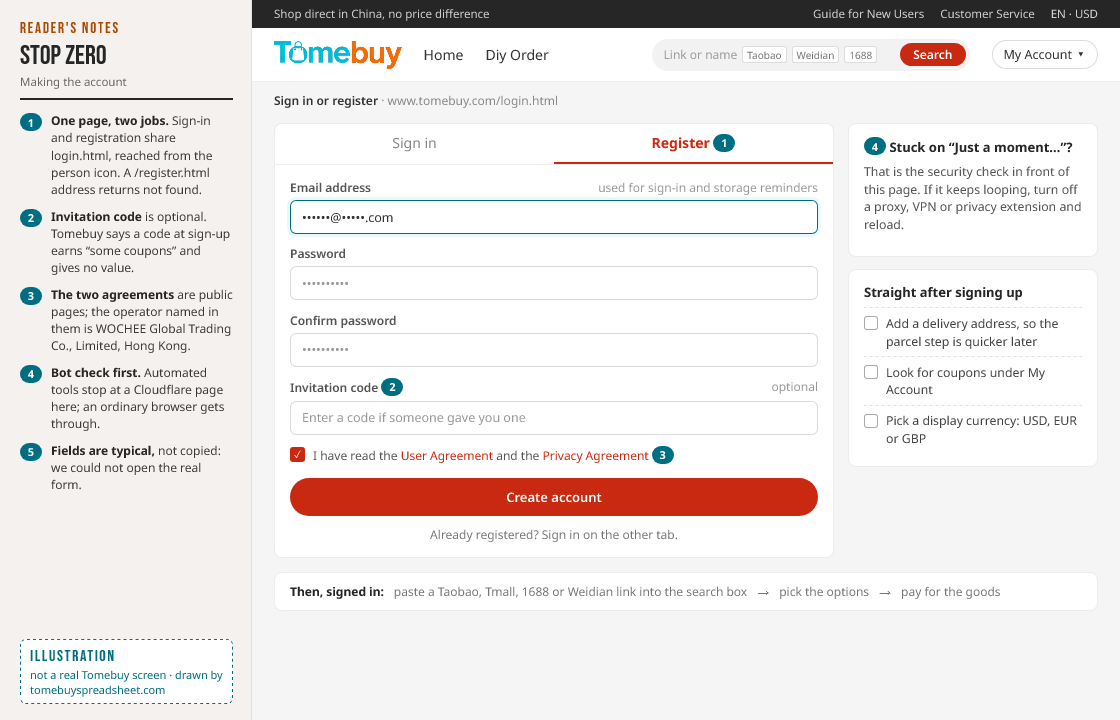
Our note on access: this page sits behind a bot check. A person with an ordinary browser gets through; automated tools are stopped, which is why there is no screenshot of the form here. If the check loops, switch off any proxy or privacy extension and try again. The picture above is our drawing of a typical sign-up form, labelled as such, and stands in until a real capture is possible.
Stop one: find the item, four doors in
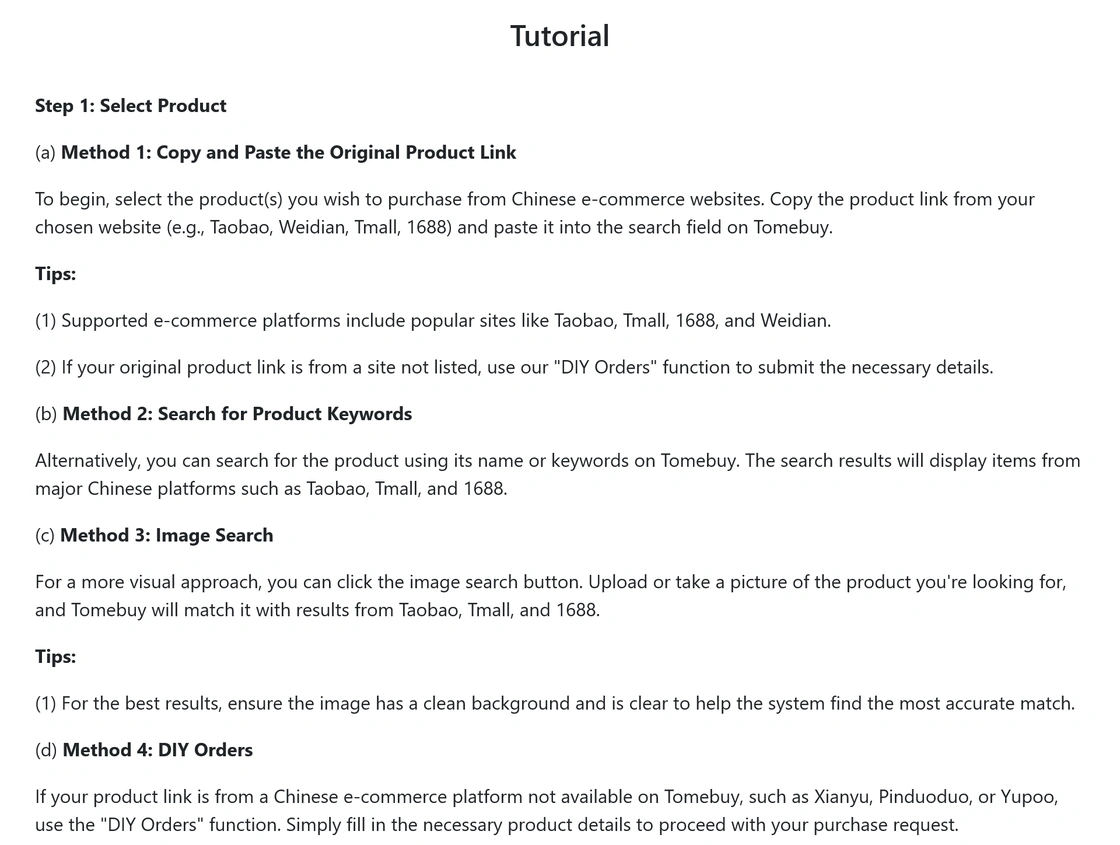
There are four ways to tell Tomebuy what you want, and they are not equally good for every case. Pasting the seller's link is the precise one: you have already chosen the shop, the colourway and the price, and nothing is left to interpretation. Keyword search is for when you know the thing but not the seller. Image search takes a photo and finds visual matches, and Tomebuy's own advice is that a clean background matches better. The fourth door, a hand-filled order, exists for marketplaces the system cannot read.
Supported by link: Taobao, Tmall, 1688 and Weidian. Those four cover most of what people shop for. For anything else, including resale and social-selling platforms, you fill the details in by hand. That route has its own page.
1688 deserves a warning of its own, and Tomebuy gives it one: many suppliers there sell in minimum quantities, so a tempting unit price can turn out to mean six of them. Check the minimum before you commit.
Stop two: choose the options and submit
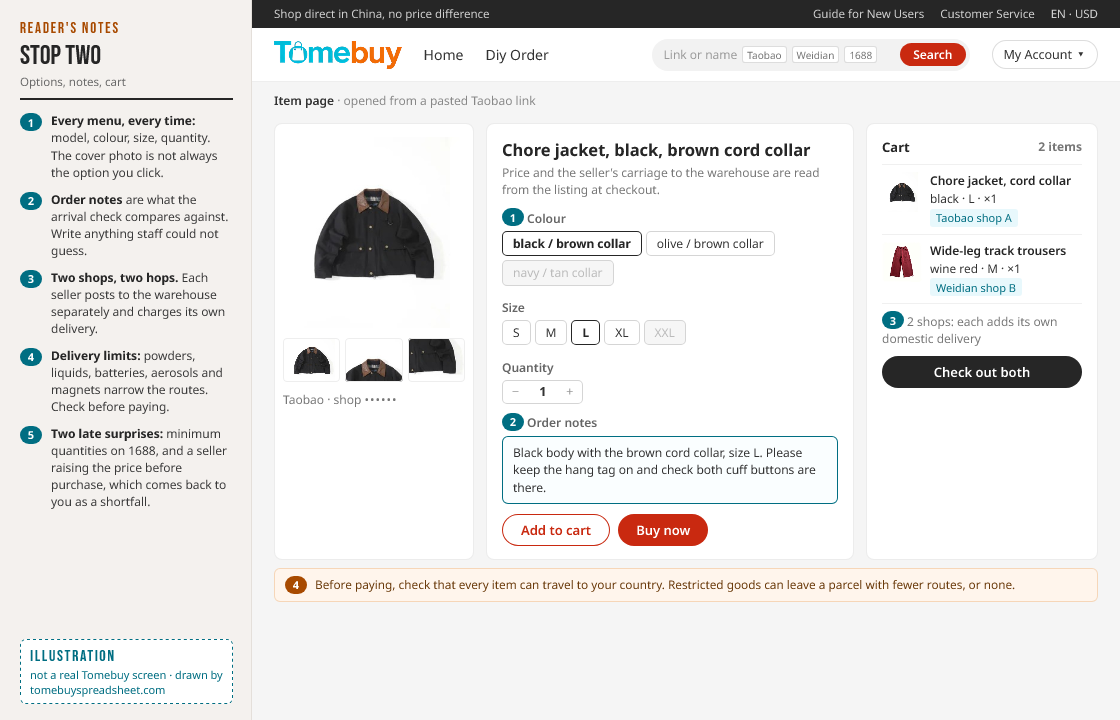
Pick model, colour, size and quantity, then either add the item to the cart or go straight to checkout. The cart is worth using even for a single item, because it is where you can see several orders together before paying for all of them.
This is the moment to write order notes. Anything the warehouse would not know to check belongs here: which of two similar colours you meant, that you want the hang tag kept, that a measurement matters. The arrival check compares the goods against what your order says, so a note turns a vague expectation into something staff can actually verify.
Check delivery restrictions before you pay rather than after. Powders, liquids, batteries, aerosols and magnets all narrow the list of routes that will carry the parcel, and some destinations refuse them outright. What travels badly.
Stop three: paying the seller, and the hop across China
The first payment covers the product price plus the seller's delivery to the Tomebuy warehouse. It does not include international freight, which nobody can calculate yet, because the parcel does not exist and has not been weighed.
Card payments run through a PayPal-operated card channel. You can also hold a balance in the account and pay from it, and a balance is useful later: the final freight is settled after packing, and a short balance holds the parcel at the warehouse until you top it up. Withdrawing a balance back out is possible but slow, with Tomebuy quoting ten to fifteen working days and noting that banks often take longer.
If the seller raises the price between your order and the purchase, you may be asked to pay a shortfall. That is normal across this whole kind of service and is not a fee Tomebuy is adding: it is the difference between the listed price and what the seller now wants.
Stop four: staff buy it, and the waiting starts
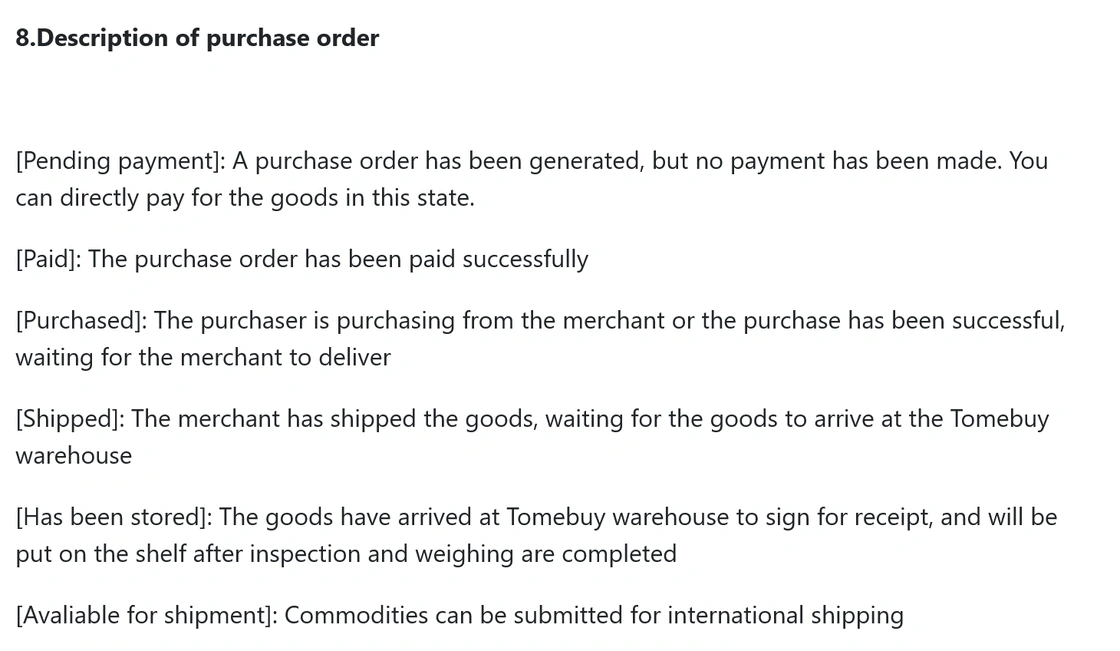
Purchasing staff place the order with the seller and have it sent to the warehouse. From here the order status is the only honest progress bar you have, and the words are specific: paid, purchased, shipped, has been stored, available for shipment. Each one tells you who is holding things up.
How long the seller takes is the part nobody controls. Tomebuy's help centre puts typical dispatch at three to seven days, excluding made-to-order and pre-sale goods, and then adds transit inside China on top: about one working day from the Pearl River Delta, around three from the Yangtze Delta, up to seven from elsewhere. A slow week is usually a distant seller, not a lost order.
There is a contact button on the order itself, which reaches the person handling that purchase rather than general support. Use it for anything order-specific; it is faster than email.
Stop five: the arrival check, the photos, and the clock
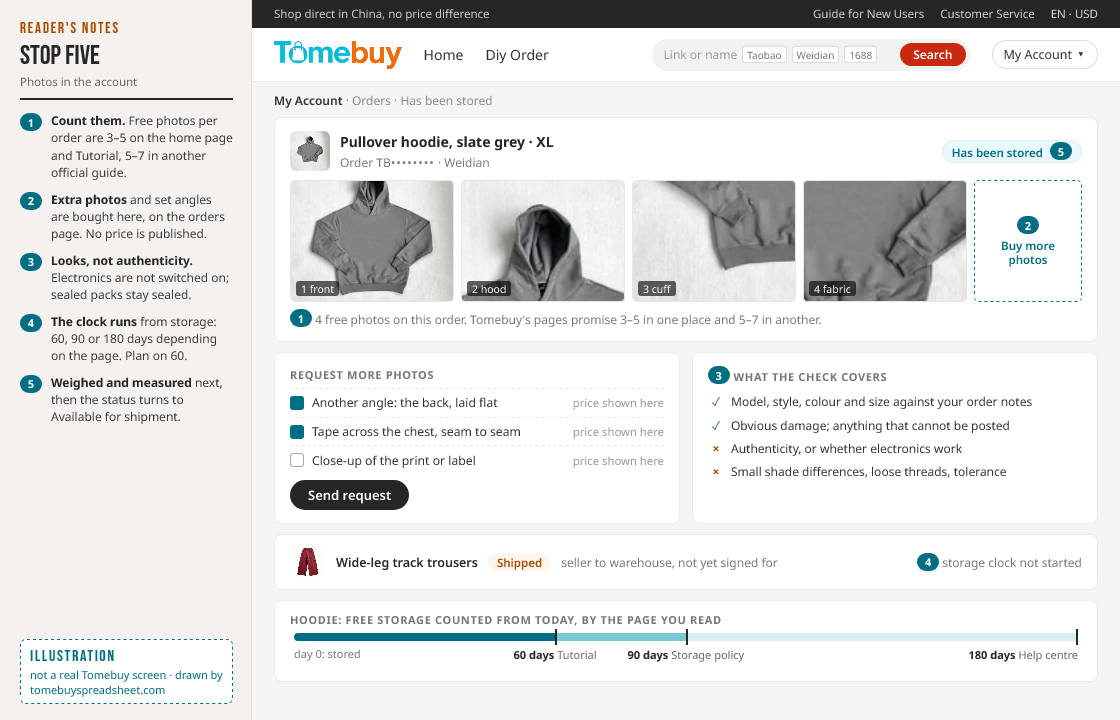
This is the stage that makes an agent worth using, and the one people misread. Arrival means five things in one afternoon: a check, a set of photographs, a weighing, a measuring and a shelf. The check is an appearance check: model, style, size, colour, obvious damage, and whether the parcel holds anything that cannot be posted.
It is not an authenticity check and not a function test. Electronics are looked at for accessories and visible damage, not switched on. Sealed packaging stays sealed. Small colour differences, loose threads and measurement tolerance are explicitly outside the service. Knowing that line in advance is what stops the argument later.
Free photos come with every order: three to five of them according to the home page and the Tutorial, five to seven according to another official guide. More photos, or specific angles, such as a tape laid across the chest or a close look at a printed detail, can be bought from the orders page. How to read the set you get.
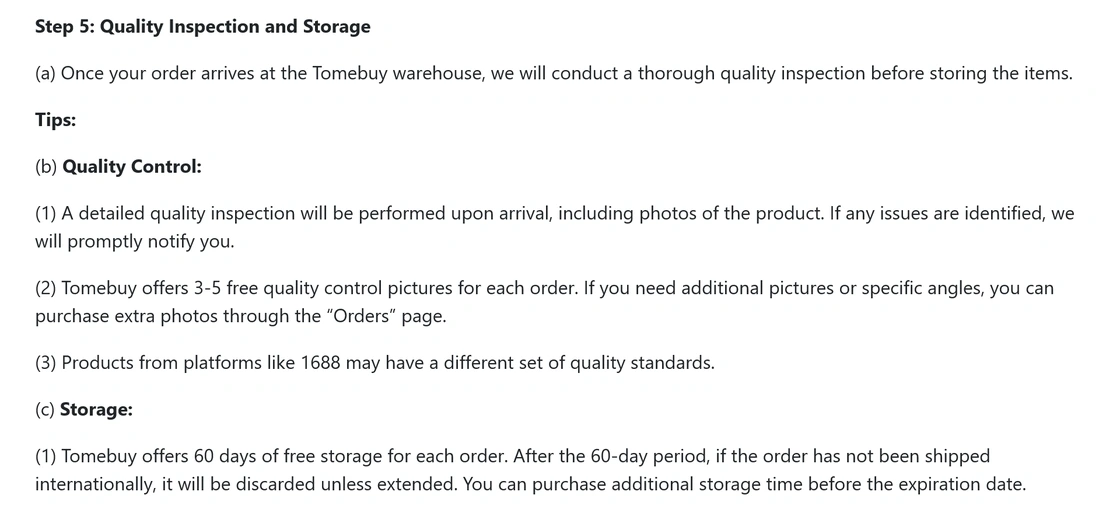
The storage clock starts here, and Tomebuy prints three different lengths for it in three places. Plan around the shortest, sixty days. All three, with their pages.
Stop six: building the parcel, paying the freight
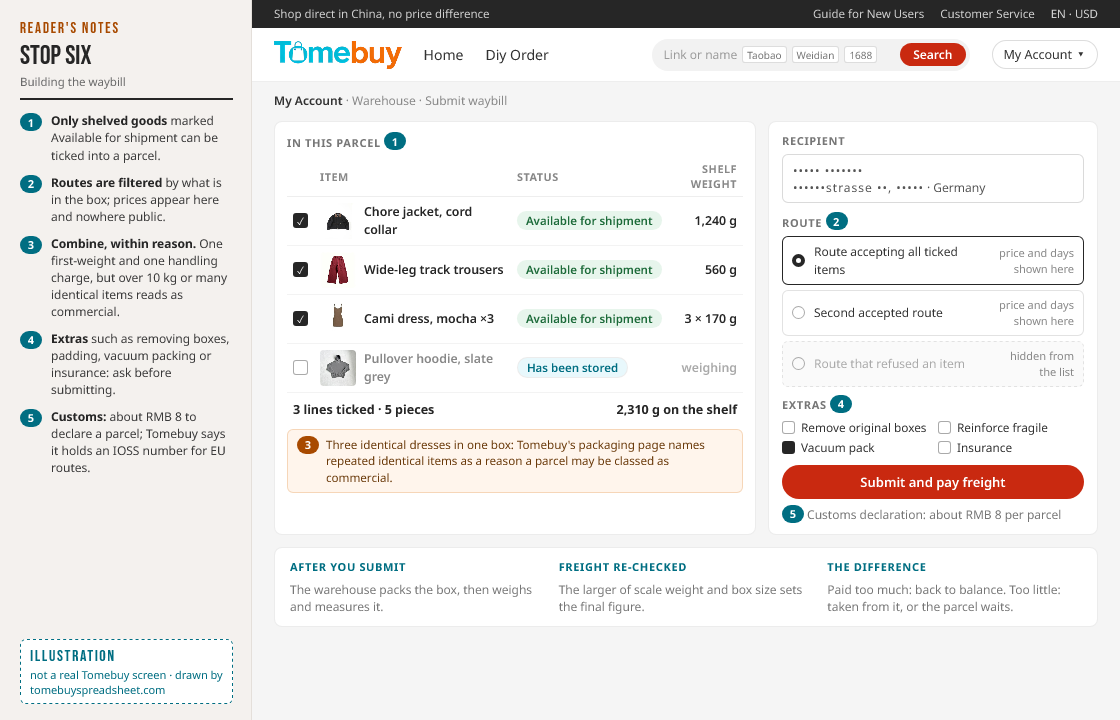
Go to the warehouse page, tick the items you want in this parcel, choose the recipient address and pick a route. The system shows which routes will carry what you have selected, which is where restricted goods quietly disappear from the list.
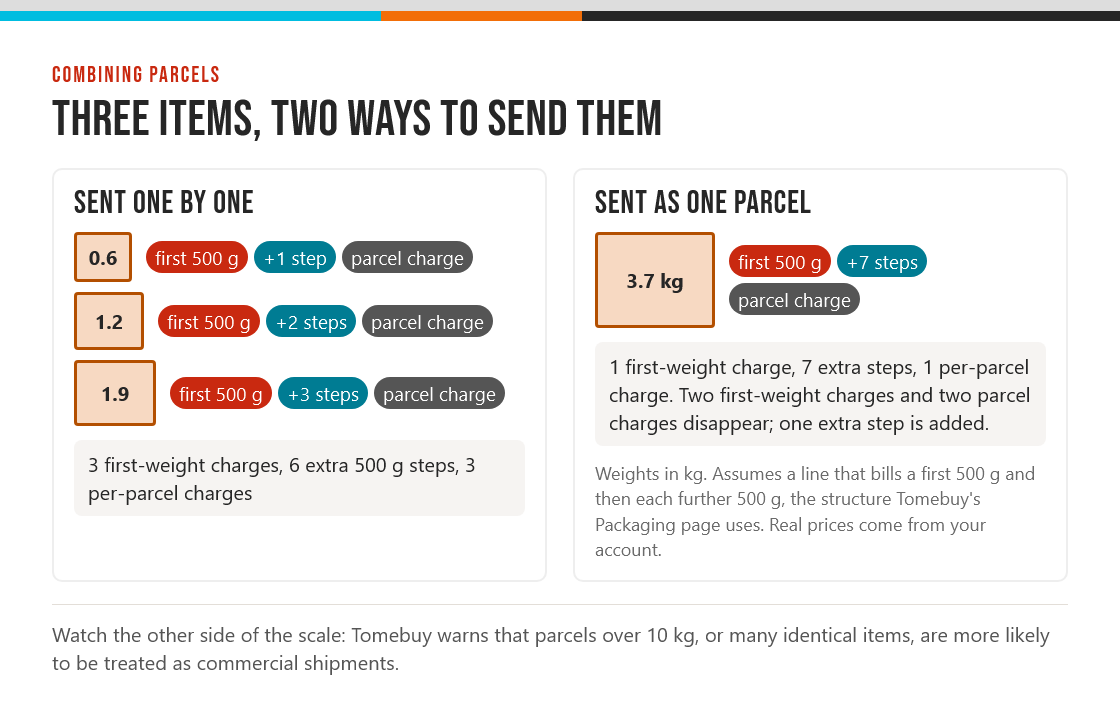
Decide here whether to combine. Sending three items in one parcel pays one first-weight charge instead of three and one handling charge instead of three; the trade is that a single heavier parcel looks more commercial to customs. Tomebuy itself flags ten kilograms and repeated identical items as the two triggers.
Optional services are chosen at this point too: removing bulky original packaging, reinforcement for fragile goods, vacuum packing for soft goods, insurance. Ask before you submit, not after.
Stop seven: packing, weighing, and the price difference
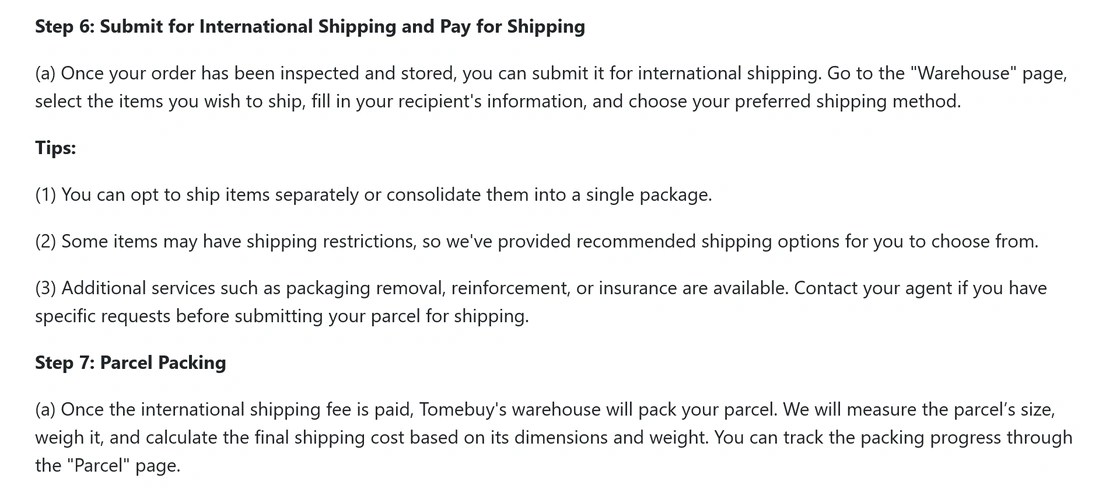
Once freight is paid the warehouse packs the parcel, measures it and weighs it. The figure you paid was based on the weight recorded when the goods were shelved; the real parcel, with its box and padding, usually differs. Overpayment goes back to your balance, underpayment comes out of it, and if the balance cannot cover it the parcel waits.
Two numbers decide the final price: what the scale says and what the box measures. Whichever is larger is the one you are billed on. The checker shows both for any box.
Stop eight: the international leg
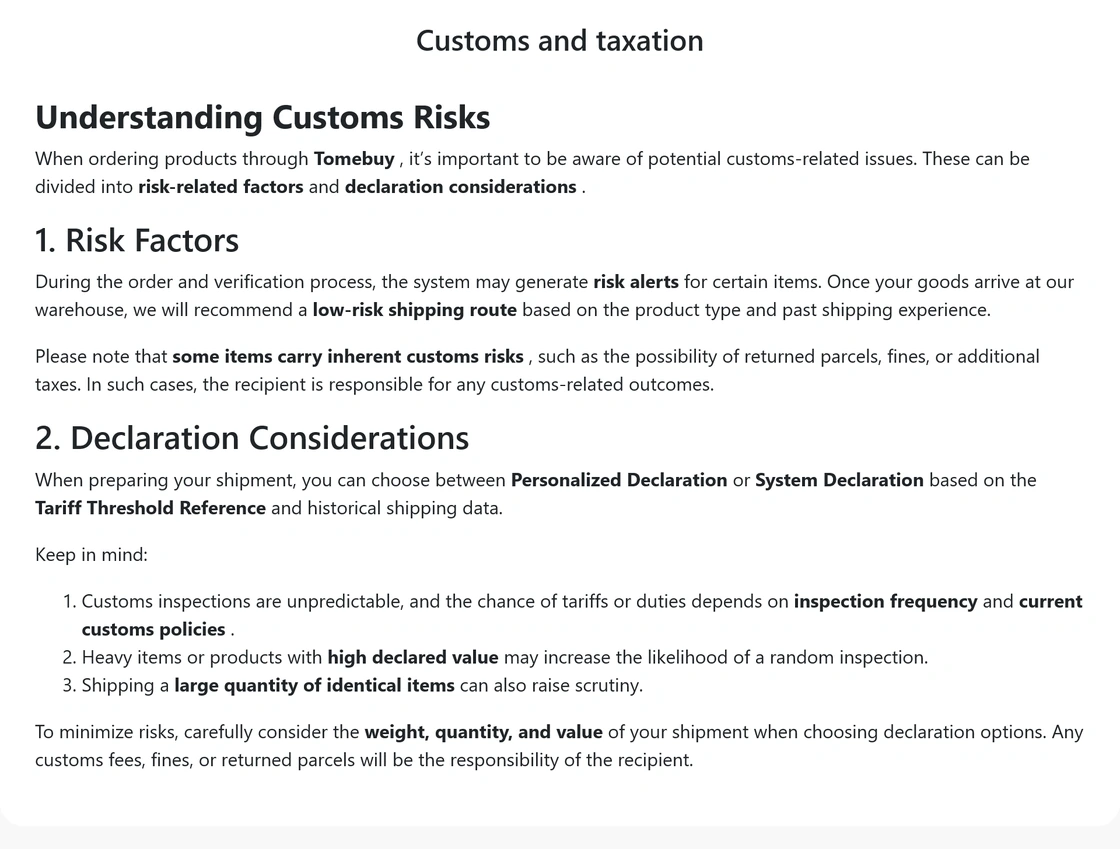
The parcel leaves the warehouse and tracking appears under the parcel page in your account. Delays, customs inspection, duty and loss are all possible and none of them are under the agent's control; Tomebuy says as much in plain words and promises to keep you informed rather than to prevent them.
If customs opens the parcel, it is the recipient who deals with the consequences and pays any charge. For purchases, Tomebuy says it can supply a screenshot of the payment record, not a formal invoice, which is worth knowing before a clearance agent asks for paperwork. Customs in detail.
Stop nine: confirm receipt, then after-sales
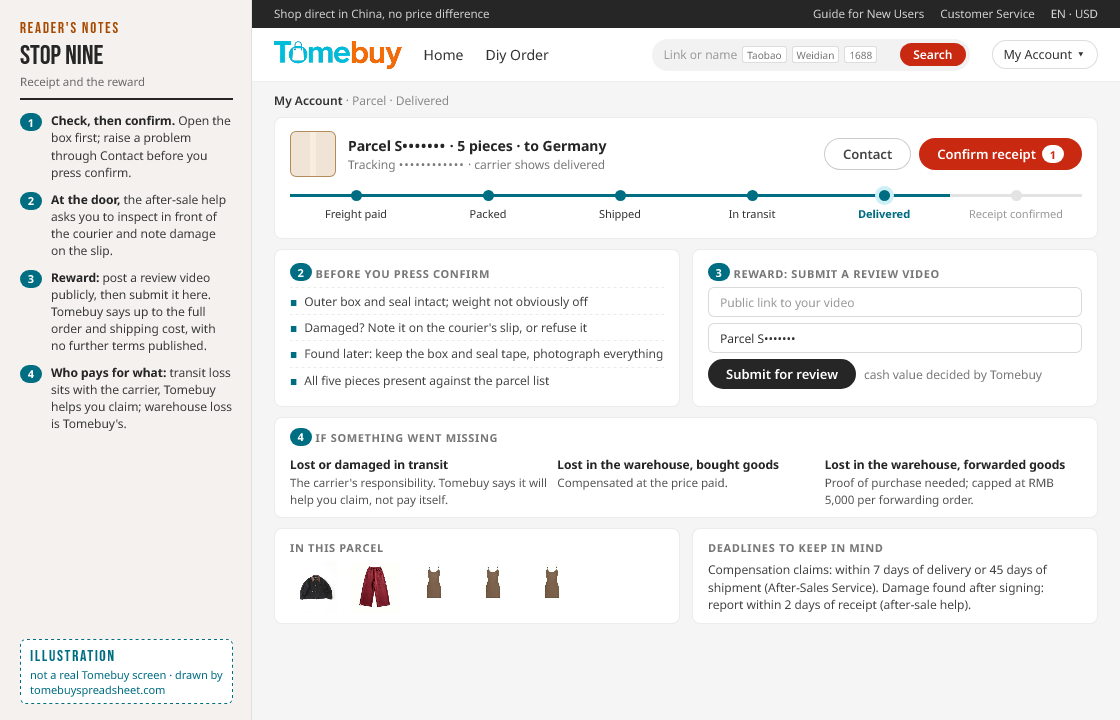
Open the parcel page and confirm delivery. If something is wrong, say so before you confirm: the contact button on the parcel is the route into after-sales, and a confirmed parcel is a harder conversation.
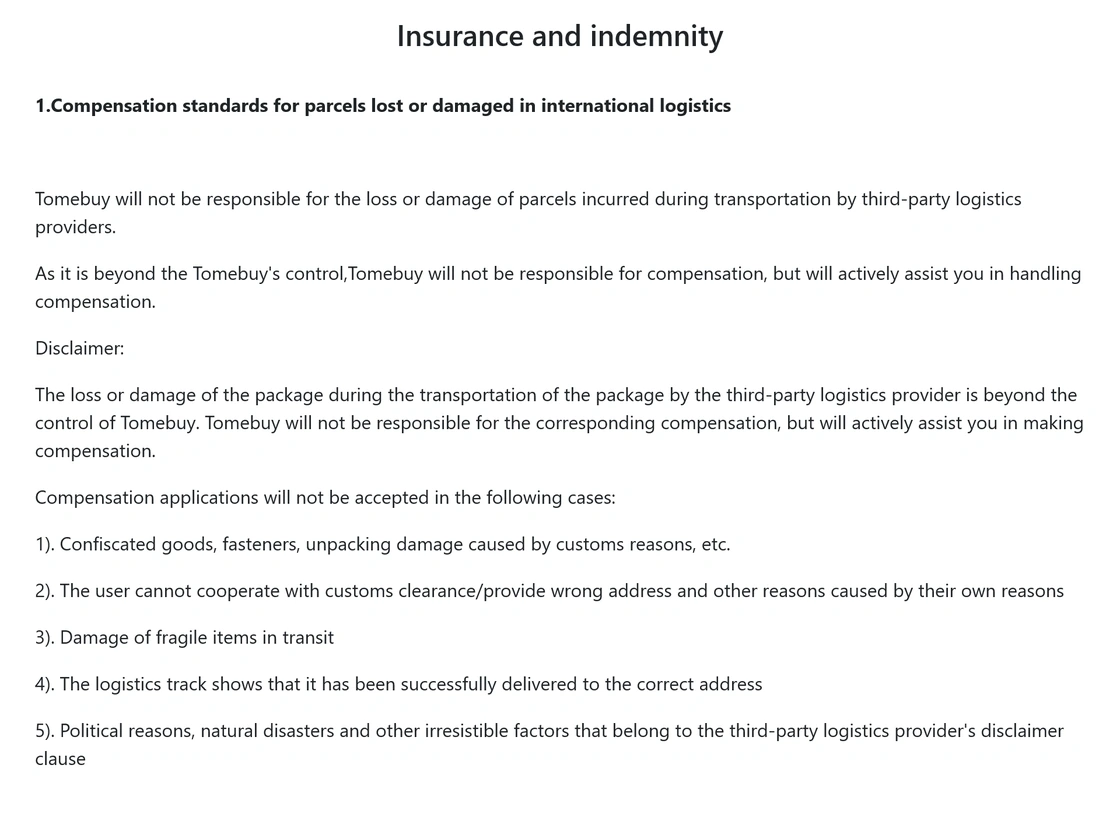
Damage in transit is handled by the carrier, not the agent. Tomebuy states that it does not compensate for third-party transport loss but will help you claim, and it lists the cases where no claim is accepted at all: goods seized by customs, wrong addresses, fragile items broken in transit, and anything the tracking shows as delivered to the right address.
Loss inside the warehouse is different and clearer: purchased goods are compensated at the price paid, and forwarded goods need proof of purchase, capped at RMB 5,000 per forwarding order.
There is also a reward: Tomebuy invites buyers to post a review video on social media and claim through the reward section, saying it can return up to the full order and shipping cost in cash. The terms are not published beyond that sentence, so ask support what qualifies before you count on it.
After the first one
A second order is a different experience, because the vocabulary has stopped being noise. The two habits worth keeping: write order notes every time, and ship before the shortest storage figure expires rather than the longest. Everything else is detail you can look up.
DIY orders and parcel forwardingReading the inspection photosStorage, returns and exchanges